The role of the client in the genesis and development of the Castellón seminar (Luis Cubillo de Arteaga, 1961-66)
DOI:
https://doi.org/10.17979/aarc.2023.10.0.10177Keywords:
Castellón seminary, Josep Pont i Gol, Luis Cubillo, religious architecture, post-conciliar liturgyAbstract
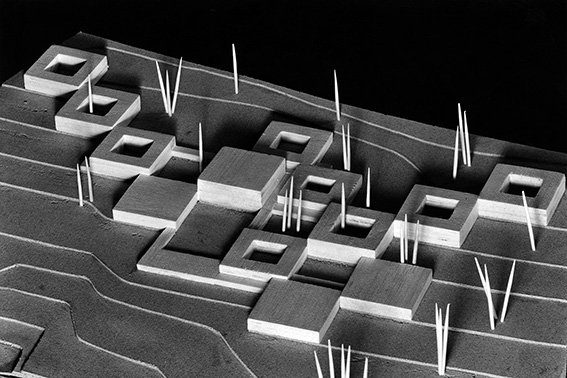
In 1961 Luis Cubillo de Arteaga designed, commissioned by the General Directorate of Ecclesiastical Affairs, the Seminary of Castellón, a building that became one of the landmarks of its author’s religious architecture.
In the Seminary of Castellón the importance of the client was huge. A work team was created with absolute freedom of suggestions and criticism, which Cubillo successfully incorporated into his project. There was very fluid communication between the architect and the client, through abundant correspondence and visits by Bishop Josep Pont i Gol to the Cubillo office.
The Seminary made an important typological contribution to Spanish religious architecture, both because of the novelty of the complex conception and because of the interior organization of the temple, anticipating what the Second Vatican Council was going to support a few years later.
Downloads
References
Delgado Orusco, Eduardo. 1999. Arquitectura sacra española, 1939-1975: de la posguerra al posconcilio. Tesis Doctoral, Universidad Politécnica de Madrid.
Fernández-Cobián, Esteban. 2019. «La renovación litúrgica de las iglesias en España tras el Concilio Vaticano II». Actas de Arquitectura Religiosa Contemporánea 6: 84-113. https://doi.org/10.17979/aarc.2019.6.0.6231.
García Herrero, Jesús. 2015. La arquitectura religiosa de Luis Cubillo de Arteaga (1954-1974). Tesis Doctoral, Universidad Politécnica de Madrid.
García Herrero, Jesús. 2016. «El Seminario de Castellón: la espiral y la cruz». En 3 Congreso Nacional Pioneros de la Arquitectura Moderna Española: Análisis crítico de una obra, 344-355. Consultado el 07/10/2023, https://bit.ly/3t46Vjn.
Perarnáu, José. 1967. «Seminario Diocesano de Castellón de la Plana», ARA. Arte Religioso Actual 12: 15-21.
Piqueras Moreno, José et al. 2017. Arcadi Blasco. Art, arquitectura i memòria (1954-1974). Alicante: Museu de la Universitat d’Alacant.
Saborit Badenes, Pere y Ángel Albert Esteve. 2016. Apuntes para la Historia del Seminario Mater Dei. Castellón: Servicio de Publicaciones Diputación de Castellón.
Zahner, Walter. 2007. «La construcción de iglesias en Alemania durante los siglos XX y XXI: En busca de una casa para Dios y para el hombre». Actas de Arquitectura Religiosa Contemporánea 1: 38-71. https://doi.org/10.17979/aarc.2007.1.0.5017.