

Review of the book: Ethical challenges of AI in academia: Impact and implications for higher education
Article Sidebar
Main Article Content

DOI:
https://doi.org/10.17979/reipe.2026.13.1.13684Abstract
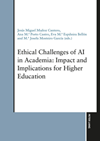
The book Ethical Challenges of AI in Academia: Impact and Implications for Higher Education analyses the impact of artificial intelligence on higher education from an ethical and international perspective. The volume addresses educational personalisation, academic integrity, "AIgiarism", scientific authorship, university assessment, and the transformation of the teaching role in the context of generative AI. Through research studies and experiences developed in different countries, the authors propose pedagogical strategies, regulatory frameworks, and institutional guidelines aimed at promoting the responsible use of artificial intelligence and strengthening academic honesty, learner autonomy, and critical thinking in contemporary university environments.
Keywords:
Downloads
Article Details
References
NOWOTNY, Helga (2022). In AI we trust: Power, illusion and control of predictive algorithms. Polity Press.
NUSSBAUM, Martha C. (1997). Cultivating humanity: A classical defense of reform in liberal education. Harvard University Press.
SADIN, Éric (2023). La era del individuo tirano: El fin de un mundo común. Caja Negra Editora.
TWENGE, Jean M. (2018). iGen: Why today’s super-connected kids are growing up less rebellious, more tolerant, less happy—and completely unprepared for adulthood. Atria Books.
UNESCO (2019). Beijing consensus on artificial intelligence and education. https://unesdoc.unesco.org/ark:/48223/pf0000368303
UNESCO (2021). Recomendación sobre la ética de la inteligencia artificial. https://unesdoc.unesco.org/ark:/48223/pf0000381137_spa
UNESCO (2024). Marco de competencias paradocentes en materia de IA. https://unesdoc.unesco.org/ark:/48223/pf0000393813